FHA Loan 580 Credit Score: Minimum Requirements & Approval Odds
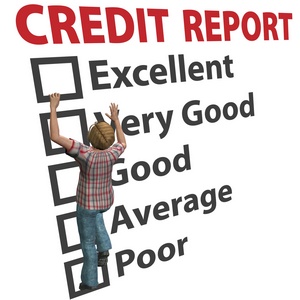 The FHA minimum credit score is 580 with a 3.5% down payment. This is the threshold where homeownership becomes realistic for millions of Americans who might not qualify for conventional mortgages. If you're asking "can I get an FHA loan with bad credit?" the answer is yes—but understanding your lender's exact requirements, how your score affects interest rates, and what steps improve approval odds is critical before applying.
Unlike conventional loans that typically require 620 or higher, FHA financing opens the door for borrowers rebuilding credit, facing financial hardship, or managing lower credit histories. That flexibility makes FHA one of the most accessible paths to homeownership in the United States.
This guide walks you through the credit score landscape for FHA loans: what the minimum truly means, how lenders interpret it, what factors matter beyond the numbers, and actionable strategies to strengthen your application before your mortgage lender reviews it.
Understanding the FHA Minimum Credit Score of 580
The FHA 580 credit score requirement with 3.5% down is the most common baseline lenders use. This threshold balances accessibility with risk management—borrowers at this level are statistically capable of meeting monthly mortgage obligations.
However, 580 is not the absolute floor. The lowest FICO for an FHA loan approval is actually 500, but only if you contribute a 10% down payment instead. This higher down payment compensates lenders for increased credit risk, making homeownership possible even for borrowers actively rebuilding their financial profiles.
Here's how the FHA credit score tiers break down:
| Credit Score Range | Minimum Down Payment | Typical Lender Availability |
|---|---|---|
| 580 and above | 3.5% | Widely available |
| 500-579 | 10% | Limited availability |
| Below 500 | Not eligible | Not available |
Meeting 580 doesn't guarantee approval. Lenders examine your complete credit history, recent payment patterns, existing debts, employment stability, and overall financial behavior. A borrower at 580 showing consistent improvement and responsible recent activity will receive a better evaluation than someone at the same score with declining trends or fresh negative marks.
What Credit Score Do You Really Need for FHA Loan Approval?
While 580 is the regulatory minimum, the FHA loan credit score you actually need depends on individual lender standards. Many lenders add their own requirements—called "overlays"—above federal minimums.
Some lenders work comfortably with 580; others prefer 600, 620, or higher to reduce portfolio risk. Larger national lenders typically set overlays at 620+, while FHA-specialist lenders often stick closer to the 580 minimum.
Here's the practical reality: a higher score unlocks meaningful benefits:
- Better interest rates – Borrowers with 660+ scores often receive 0.5–1.0% lower rates than those at 580.
- Faster approvals – Higher scores reduce underwriter scrutiny and documentation requests.
- Better loan terms – Fewer conditions, fewer contingencies, smoother closing.
- Competitive edge – In bidding wars, sellers favor buyers with stronger credit profiles.
These benefits compound over 30 years. A half-point rate reduction can save $60,000+ in total interest costs. If you have time before applying, improving your score is financially worthwhile.
How Lenders Evaluate Credit Beyond Your Score
Your credit score is one data point. Lenders also scrutinize:
Payment History (Most Important)
This comprises 35% of your FICO score and is the first thing underwriters examine. Consistent, on-time payments—especially on mortgages, car loans, and credit cards—demonstrate reliability. Recent late payments (within the last 12–24 months) are red flags. Payments 30, 60, or 90+ days late trigger deeper investigation and may require written explanations.
Credit Utilization Ratio
Using more than 30% of available credit signals financial stress, even if your score meets minimums. If you have $10,000 in available credit, keep balances under $3,000. Paying down high balances before applying improves both your score and lender perception.
Recent Credit Activity
New credit inquiries and newly opened accounts suggest you're taking on debt, raising concerns about your ability to handle a mortgage. Avoid opening new credit cards, auto loans, or store accounts in the 3–6 months before applying.
Credit Mix
Demonstrating experience managing different credit types—installment loans (auto, student, personal), revolving credit (credit cards), and mortgage accounts—shows financial maturity. If you only have credit card debt, lenders view you as higher risk.
Credit History Length
Longer credit histories are favorable. Borrowers with established accounts spanning 5+ years demonstrate stability better than those with thin files. If you're building credit from scratch, this limitation is important to understand.
Recent Negative Events
Bankruptcies, foreclosures, and collections require waiting periods and explanations, regardless of your current score:
- Chapter 7 bankruptcy – Must wait 2 years from discharge (3 years if you lost a home to foreclosure in the same bankruptcy)
- Chapter 13 bankruptcy – Must wait 1 year from filing (with lender approval on the payment plan)
- Foreclosure – Must wait 3 years (can be waived to 2 years if extenuating circumstances are documented)
- Collections – FHA has relaxed requirements; unpaid collections don't automatically disqualify you, but lenders may require payment or a settlement agreement
FHA Credit Requirements Beyond the Score Number
Credit is just one qualifying factor. Lenders also evaluate:
Debt-to-Income Ratio (DTI)
FHA allows DTI up to 43% of gross monthly income (with exceptions for well-qualified borrowers reaching 50%). This includes your proposed mortgage payment plus all current debts: car loans, credit cards, student loans, personal loans, and child support.
To calculate your DTI, add all monthly debt payments and divide by gross monthly income. If you earn $5,000/month and have $1,500 in debts, your DTI is 30%—well within limits.
Use our DTI calculator for FHA loans to verify your current ratio and identify which debts to pay down.
Income Stability & Employment History
Lenders want 2 years of steady work in the same field. Job changes within your industry are acceptable; changing careers may trigger questions. Self-employed borrowers face stricter documentation: typically 2 years of tax returns and profit-and-loss statements.
Down Payment & Savings
Your down payment must come from FHA-approved sources: personal savings, family gifts (with gift letters), assistance programs, or employer contributions. All sources require documentation. This ensures funds are legitimate, not borrowed debt that would inflate your DTI.
Asset Documentation
Lenders verify bank statements, investment accounts, and retirement funds. Having 2+ months of mortgage payments in liquid savings (post-closing reserves) strengthens your application, especially if your credit is marginal.
How Credit Score Directly Impacts Interest Rates & Costs
Even within FHA lending, your credit score determines the interest rate you're offered. The pricing grid lenders use adjusts rates based on credit tiers:
- 580–600 – Highest rates (example: 6.75%)
- 600–640 – Mid rates (example: 6.50%)
- 640–680 – Better rates (example: 6.25%)
- 680+ – Best rates (example: 6.00%)
These are illustrative; actual rates depend on market conditions and your lender. But the pattern is consistent: higher credit = lower rates.
Over 30 years, a 0.5-point rate difference on a $250,000 loan equals roughly $45,000 in additional interest costs. A 1-point difference = $90,000+. Improving your score before applying is one of the best financial investments you can make.
Mortgage Insurance Premiums (MIP)
Unlike interest rates, FHA mortgage insurance premiums are not credit-dependent. All borrowers pay:
- Upfront MIP (UFMIP) – 1.75% of loan amount (can be rolled into the mortgage)
- Annual MIP – 0.45–1.05% of loan balance annually, depending on loan-to-value ratio and loan term
These insurance costs protect lenders but increase your monthly payment. Unlike conventional loans, FHA insurance typically cannot be removed without refinancing—even once you reach 20% equity.
Use our FHA MIP calculator to estimate your total insurance costs and factor them into affordability.
Improving Your Credit Score Before FHA Application
If you're below 580 or want to improve your rate, take action now. Credit improvement takes time, but proven tactics work:
Pay All Bills On Time (Highest Impact)
Payment history comprises 35% of your FICO score. Even one late payment can drop your score 100+ points. Set up automatic payments on all accounts to prevent missed due dates. If you've had recent late payments, 6–12 months of perfect payment history will visibly rebuild your score.
Pay Down Credit Card Balances
High credit utilization (balances above 30% of limits) signals financial stress. If you have $5,000 across credit cards with $15,000 total limits, you're at 33%—reduce to under $4,500 to reach 30%. Paying down high-balance cards can raise your score 50+ points in 1–2 months.
Dispute Credit Report Errors
Check your free annual reports at AnnualCreditReport.com (the only official source). Look for:
- Accounts you don't recognize
- Late payments reported incorrectly
- Duplicate accounts
- Accounts that should be closed or removed
File formal disputes with the credit bureau. Removing false negatives can raise your score significantly.
Avoid Opening New Credit
Each new application triggers a hard inquiry (lowers score 5–10 points temporarily) and adds a new account (lowers average age of credit). Delay opening new cards, loans, or accounts for 3–6 months before applying for your mortgage.
Keep Old Accounts Open
Closing old credit cards shortens your credit history and can raise your utilization ratio. Even if you don't use them, keep older accounts open to maintain credit length and available credit limits.
Consider a Credit Counselor
Non-profit credit counseling agencies (verify HUD certification) offer free or low-cost guidance on debt management, budgeting, and rebuilding strategies. Many lenders view credit counseling favorably when you've had past financial difficulties.
FHA vs. Conventional Loan Credit Requirements: What's the Difference?
The gap between FHA and conventional standards illustrates FHA's accessibility:
| Factor | FHA Loan | Conventional Loan |
|---|---|---|
| Minimum Credit Score | 580 (500 with 10% down) | 620 (680+ preferred for competitive rates) |
| Minimum Down Payment | 3.5% (with 580+ score) | 5–10%; 20% to avoid PMI |
| Maximum DTI | 43% (50% for well-qualified) | 43% (some lenders 50%) |
| Mortgage Insurance | Always required (cannot remove without refi) | Can be removed once 20% equity reached |
| Credit Flexibility | Higher tolerance for past issues; shorter waiting periods | Stricter; longer waiting periods post-bankruptcy/foreclosure |
For borrowers with 580–620 credit, FHA offers substantially better terms. Even borrowers with 620+ credit sometimes choose FHA for the lower down payment requirement, which preserves cash for closing costs and emergency reserves.
Compare FHA vs. conventional mortgages to determine which loan type fits your financial situation.
Working with Lenders on FHA Credit Requirements
Not all lenders treat the FHA 580 minimum the same way. Some specialize in FHA lending and have flexible overlays; others focus on conventional products and avoid FHA borrowers at the low end of the credit spectrum.
Lender shopping is critical:
- Get pre-approvals from 3+ lenders – Compare rates, fees, and credit requirements. One lender might decline you; another might approve easily.
- Ask about overlays – "What's your minimum credit score for FHA loans?" Listen carefully—some say "580," others say "640."
- Prepare documentation upfront – Have tax returns, pay stubs, bank statements, and debt lists ready. This speeds approval and demonstrates organization.
- Consider FHA specialists – Banks and credit unions that focus on FHA lending often have more lenient standards than mortgage companies juggling all loan types.
Taking time to find the right lender can mean the difference between approval and rejection, and between a competitive rate and a punitive one.
Special Considerations for FHA Credit Requirements
Collections & Charge-Offs
FHA recently relaxed collection account requirements. You no longer need to pay every collection balance to qualify—but lenders still scrutinize them carefully. Recent, large unpaid collections may require resolution; older, smaller accounts may be overlooked. Expect to answer questions and provide written explanations.
Student Loan Debt
Student loans affect both credit scores and DTI calculations. FHA uses a standardized formula to calculate your monthly obligation—typically 0.5% of the outstanding balance for income-driven repayment plans, or your actual payment for standard 10-year plans. Large student debt can disqualify borrowers with marginal income. See our student loan payment explanation for details.
Thin Credit Files
Borrowers with limited credit history (few accounts, short history) may struggle to qualify even if their score meets 580, because lenders prefer established payment patterns. If you have a thin file, consider:
- Becoming an authorized user on an established account
- Opening a credit-builder loan
- Using a secured credit card
- Waiting 6–12 months to build more history
FHA Credit Requirements for Different Loan Types
FHA 203(b) Purchase & Cash-Out Refi
Standard FHA loans require full credit and income verification. You must meet the FHA 580 credit score minimum (or 500 with 10% down) and qualify based on DTI, employment, and assets. These are the transactions we've been discussing throughout this guide.
FHA Streamline Refinance
If you already have an FHA mortgage, streamline refinancing allows you to lower your rate with minimal paperwork and no new credit check or income verification. This is powerful for borrowers whose credit has declined since original financing. Your existing FHA loan history is proof of payment ability.
FHA 203(k) Renovation Loan
These loans combine purchase and improvement financing. Because of project complexity, some lenders prefer slightly higher scores (600+) or may add extra conditions. Ask lenders directly about their 203(k) credit requirements.
Geographic Differences & Lender Overlays
While FHA sets national guidelines, lenders adjust standards regionally:
- High-foreclosure areas – Stricter credit requirements, longer waiting periods post-foreclosure
- High-cost markets – Some lenders loosen credit standards to attract borrowers; others tighten them
- Rural areas – May have fewer lenders, limiting your shopping options
Local market conditions and individual lender risk appetites drive overlays. That's why getting pre-approved with multiple lenders in your area is essential.
FHA loan limits also vary by county, ranging from ~$541,287 in low-cost areas to $1M+ in expensive markets. Loan limits don't affect credit requirements but determine the maximum borrowing amount.
Long-Term Credit Management After FHA Loan Approval
Approval is the beginning, not the end. Maintaining strong credit after closing opens future opportunities:
Build Payment History
Your mortgage payment carries significant weight in credit calculations due to loan size and consistency. On-time payments for 12–24 months can raise your score 50+ points, positioning you to refinance to conventional financing (if you reach 20% equity) and eliminate FHA mortgage insurance.
Monitor Your Credit Regularly
Use free credit monitoring services (Credit Sesame, Credit Karma) to track score changes, catch identity theft, and spot reporting errors early. Most services send alerts when new accounts open, inquiries occur, or significant changes happen.
Plan a Refinance to Conventional
Once you build 20% equity and improve your credit score above 620 (ideally 660+), refinancing to a conventional mortgage removes FHA insurance, reducing monthly payments significantly. On a $250,000 loan, eliminating MIP saves $150–250/month.
Many FHA borrowers view their initial loan as a "stepping stone"—a tool to build equity and credit strength, with refinancing as the next chapter.
Frequently Asked Questions
What is the absolute lowest credit score accepted for an FHA loan?
The absolute lowest FICO for an FHA loan is 500, but borrowers in this range must make a minimum 10 percent down payment. Most lenders prefer scores of 580 or higher and may not offer financing to borrowers under this threshold. Even with a 500 score, approval is not guaranteed, as lenders review your complete credit history and may need explanations for recent negative items. Borrowers with credit scores below 580 should expect limited lender options and potentially higher interest rates, reflecting increased lending risk.
Can I get an FHA loan with a credit score of 580 and 3.5 percent down?
Yes, a 580 credit score qualifies for the standard 3.5 percent down payment option under FHA loan score requirements. This represents the minimum threshold that most lenders use for their FHA loan programs. However, approval depends on factors beyond your credit score, including your debt-to-income ratio, employment history, and recent credit activity. Borrowers at this score level should prepare full documentation and consider working with lenders specializing in FHA financing to increase their chances of approval and secure competitive rates.
How long does it take to improve my credit score enough to qualify for an FHA loan?
The time needed to improve credit scores varies based on your starting position and specific credit issues. Borrowers with recent late payments might see improvement in 3-6 months with consistent on-time payments. Those recovering from bankruptcy or foreclosure typically need 2-3 years to meet FHA waiting periods, regardless of score improvement. Simple actions like paying down credit card balances can boost scores within weeks, while building credit history from scratch may take 6-12 months. Working with credit counselors and making steady payments produce the fastest results.
Do all lenders accept a minimum credit score of 580 for FHA loans?
No, individual lenders maintain their own credit requirements above FHA minimums through policies called overlays. While FHA sets 580 as the FHA qualifying credit score with 3.5 percent down, many lenders require scores of 600, 620, or higher to reduce portfolio risk. Lenders specializing in FHA products typically offer more flexibility with credit standards, while large national lenders may set higher minimums. Shopping among multiple lenders helps borrowers find institutions willing to work with their specific credit profile.
Will my FHA interest rate be higher with a 580 credit score than with a 680 credit score?
Yes, interest rates vary based on credit scores, even within FHA lending. Borrowers with scores near 580 typically receive higher rates than those with scores above 660, as lenders price loans according to risk. The difference might range from 0.5 to 1.0 percentage points, depending on the lender and prevailing conditions. This rate variation significantly affects your monthly payments and total interest costs over the life of the loan. Improving your credit before applying can save you thousands of dollars, making the effort worthwhile if you're not facing urgent housing needs.
Connect With Us
Please share – it really helps