Can You Get an FHA Loan with a Cosigner?
 You find the perfect home at the right price and in the right location. But your income falls short of qualifying for the loan. Sound familiar? If you are asking, "Can you get an FHA loan with a cosigner?" the answer is yes. An FHA loan with a cosigner is one of the most flexible paths to homeownership available, but it comes with strict rules you need to understand before you apply.
Unlike traditional mortgages, FHA loans allow non-occupant cosigners. This means a family member or close friend can sign the loan documents and help you qualify even if they never live in the home. That single feature has helped thousands of buyers bridge the gap between a denied application and a set of keys.
Yes, You Can Get an FHA Loan with a Cosigner
The FHA allows non-occupant cosigners. So if you're asking this question, the answer is yes. To add a cosigner, you and your cosigner will each need to submit your financial information, complete the lender's application, and sign the mortgage documents together at closing.
The lender will review income, credit, and eligibility for both of you as part of their approval process. This way, you know what to expect when including a cosigner. If your income is too low or your monthly obligations are too high, you can get an FHA loan with a cosigner who meets HUD's borrower eligibility criteria.
A qualified cosigner can be the difference between approval and denial. Lenders evaluate both applicants when a cosigner is involved. They look at combined income, employment history, and credit scores for everyone on the loan. If your financial profile has gaps, a strong cosigner can assist in bridging them.
Before moving forward, it's critical to understand the FHA loan co borrower rules. These rules differ from conventional loans. A co-borrower on an FHA loan doesn't always have to live with you, which is a huge plus for many buyers.
If you want to see how a cosigner's income changes your numbers, run the figures through our DTI Calculator for FHA Loans. It shows you exactly how combined income affects your debt-to-income ratio.
Who Can Serve as Your Cosigner or Co-Borrower?
The FHA allows family members and close friends to cosign. Eligible cosigners include:
- Spouses or ex-spouses
- Parents
- Siblings
- Stepchildren or biological children
- Uncles and aunts
- Cousins
- Close friends with a long relationship history
One critical requirement: your cosigner must be a US citizen or a legal permanent resident (green card holder). Family ties alone won't override this rule. Even a parent or spouse cannot cosign if they lack US citizenship or permanent resident status.
You'll also need to know the specific FHA cosigner relationship requirements. HUD is strict about who can sign. The relationship must be documented and verifiable. A friend can cosign, but you might need to prove a longstanding, close relationship. That's non-negotiable.
For a deeper look at how the FHA treats residency and eligibility, see our guide on FHA Residency Requirements.
What Makes Someone a Qualified Cosigner?
Not everyone can cosign your FHA loan. The cosigner must meet strict standards. Your cosigner must:
- Have two years of steady work history with consistent income
- Document all income and assets with W2s and tax returns
- Meet the FHA's minimum credit requirements
- Be a US citizen with a valid Social Security number
- Sign all mortgage documents
The lender applies the same standards to your cosigner that they would if that person were applying for their own mortgage. There are no shortcuts or exceptions. Your cosigner's financial strength is what makes them valuable to your application.
Let's talk about the FHA loan co signer requirements. These include a decent credit score (usually 580 or higher) and a debt-to-income ratio that works with your combined finances. A cosigner with lots of debt might not help you as much as you think. Lenders will check everything twice.
Before you start asking someone to cosign, review the Credit Score Requirements for an FHA Loan. It explains the minimums and how lenders use the lowest score among all applicants.
Cosigner vs. Co-Borrower: What's the Difference?
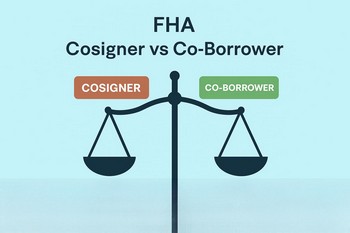
People often use these terms interchangeably, but they mean different things in FHA lending. A non-occupying co-borrower owns the property but won't live there. A cosigner signs the note and is legally responsible for payments, but they don't gain ownership rights.
In both cases, the person signs all mortgage documents and bears full financial responsibility. The key difference is ownership. Co-borrowers take title at closing. Cosigners do not. Both are equally liable for mortgage payments.
Understanding the FHA co borrower requirements is essential here. A co-borrower typically has an ownership stake, so their name goes on the title. A cosigner is more like a financial backup. Pick the role that best fits your situation.
If you are still exploring loan options, compare how FHA stacks up against other programs in our article on FHA vs Conventional Mortgage.
How a Cosigner Strengthens Your Loan Application
A qualified cosigner can help you qualify for an FHA loan. Here’s how it works.
Lower Debt-to-Income Ratio
If your debt-to-income ratio is too high, a cosigner's income gets added to yours when the lender calculates your ability to afford monthly payments. This combined income can move you from denial to approval.
Shorter Employment History
The FHA typically requires two years of steady employment. If your work history is shorter, a cosigner with solid employment records can help satisfy this requirement.
Comprehensive Financial Stability
Lenders see a cosigner as a backup plan. If you're unable to make the payment, the cosigner is legally obligated to do so. This reduces the lender's risk and improves your odds of approval.
When you're reviewing the FHA loan cosigner requirements, note that the cosigner's income must be fully documented. No cash under the table. It's all about verified, tax-reported earnings. That's what the underwriter wants to see.
What Lenders Actually Look At
When you apply for an FHA loan with a cosigner, the lender reviews both applicants' complete financial pictures. They examine credit scores, income documentation, employment verification, and existing debt for everyone involved.
Here's something important: the lender always uses the lowest credit score among applicants. For example, if you have a 650 credit score and your cosigner has a 600 score, your loan terms will be based on the 600. This means you should try to choose a cosigner with a higher credit score than yours, if possible.
A strong cosigner with excellent credit can help you maximize your approval odds and qualify for better loan terms. A poor-credit cosigner won't help you - they'll actually hurt your application. Your cosigner needs good credit to be a valuable cosigner. All applicants must meet the FHA minimums. A cosigner doesn't lower standards; they add another qualified person to help meet them.
This is where FHA cosigner guidelines get real. The guidelines say: no exceptions for low credit. If your cosigner has a 500 credit score, you're probably not going to be approved. So choose wisely. It's better to wait than to add someone who drags your application down.
The Real Responsibilities Cosigners Accept
Before someone agrees to cosign your FHA loan, they need to understand what they're signing up for. Cosigners aren't merely names on paper - they're legally liable. If you miss a payment, the lender can go after the cosigner. If you default, the cosigner's credit gets damaged.
The FHA loan appears on their credit report for the entire loan term, which can affect their ability to be approved for other loans. Cosigners should have stable income, solid emergency savings, and a realistic understanding that they could be making these payments if the primary borrower can't.
It's a significant commitment, and many cosigners don't fully grasp the risk until it's too late. Walk them through every detail. No surprises. That's the ethical way to ask for help.
Remember the FHA loan co borrower liability extends for the life of the loan. There's no automatic release after a year or two. That's a big deal. Both of you need to be ready for that long-term responsibility.
If you want to understand how the lender evaluates all of this, our FHA Loan Underwriting Process guide breaks it down step by step.
What Happens if You Want to Remove Your Cosigner?
The cosigner's obligation continues for the entire life of the loan unless they're formally removed. The primary way to remove a cosigner is through refinancing. Refinancing means replacing your current mortgage with a new one in your name only, without the cosigner.
This process entails applying for a new loan and qualifying based on your own credit, income, and financial situation. Typically, you can refinance once your finances have improved enough to meet the lender's requirements on your own. When the refinance is completed and the old loan is paid off, the cosigner is released from any further responsibility for the mortgage.
The first cosigner is released only when the loan is paid off or refinanced into a new loan in your name alone. Plan for this from the start. If your goal is to buy out your cosigner's obligation eventually, you'll need to improve your financial profile enough to qualify for refinancing on your own.
Keep the FHA cosigner relationship requirements in mind even when removing someone. If you refinance later with a new cosigner, those same relationship rules apply again. So document everything carefully from day one.
To learn more about your refinance options, visit our guide on Streamline Refinance Requirements.
Alternatives if You Can't Find a Qualified Cosigner
Not everyone has a family member or friend willing and able to cosign. If that's your situation, you have options. First-time homebuyer programs often provide down payment assistance or reduced interest rates without requiring a cosigner. State and local programs exist specifically to help buyers who don't have wealthy relatives.
You can also improve your own financial situation. Paying down existing debt, increasing your income, or raising your credit score can qualify you for a loan without a cosigner. This takes time, but it's a solid long-term strategy. Some buyers choose a co-borrower arrangement instead of a cosigner.
A co-borrower gains ownership rights and may be more willing to participate than a traditional cosigner. If you're struggling to meet FHA loan cosigner requirements, a co-borrower might be a better fit. They share ownership and liability equally. Sometimes that seems fairer to everyone involved.
If you are a first-time buyer, start with our guide on FHA Loans for First-Time Homebuyers. It covers the programs and assistance that may not require a cosigner at all.
Should You Add a Cosigner to Your FHA Loan?
A cosigner can offer entry to homeownership when your finances alone won't support it. But both you and your cosigner need realistic expectations about the responsibility you're taking on.
Before you ask someone to cosign:
- Make sure they have a good credit score
- Confirm they have a stable income and emergency savings
- Have an honest conversation about what happens if you can't pay
- Discuss your long-term plan to refinance and remove them
An FHA-approved lender can help you understand your specific circumstances and explore all available options. They can run scenarios showing how a cosigner affects your approval odds and loan terms. Use that conversation to make an informed decision. Homeownership is possible with an FHA loan and a qualified cosigner - but make sure everyone involved understands what they're committing to.
Frequently Asked Questions
Do I need a cosigner if I have a low credit score?
Not necessarily. A cosigner can help if your income is low or your debt is high. But if your credit score is very low (below 580), a cosigner might not be enough. You'll likely need to improve your own credit first. Lenders use the lowest credit score among all applicants. So a cosigner with great credit is helpful, but they can't fully erase your own credit issues.
Can a non-relative cosign an FHA loan?
Yes, close friends can cosign under FHA rules. But you'll need to show a long, verifiable relationship. The FHA cosigner relationship requirements are flexible but not unlimited. The lender will ask for proof of your friendship over time. It's not automatic. So be ready with joint leases, shared bills, or other documents that show your connection.
What happens to the cosigner if I sell the home?
Selling the home typically pays off the FHA loan. Once the loan is paid in full, the cosigner is automatically released. They have no further responsibility. Their credit report will show the loan as closed and paid. That's a clean exit for everyone. Just make sure the sale price covers the full mortgage balance, or you'll need to bring extra cash to closing.
Are the FHA co borrower requirements different from cosigner rules?
Yes, and the difference matters. A co-borrower takes ownership of the home and appears on the title. A cosigner does not. But both are fully liable for the mortgage. Co-borrowers often have a stronger incentive to help with payments because they hold a share of the property. Cosigners help out of goodwill, without getting equity. So choose the role based on what everyone agrees to upfront.
Can I remove a cosigner without refinancing?
Rarely. The only standard way to remove a cosigner is to refinance into a new loan in your name only. Some lenders may allow a cosigner release after a certain number of on-time payments, but FHA guidelines don't guarantee that. Most loans require a full refinance. So don't promise your cosigner an easy exit unless you're sure you can refinance later.
Connect With Us
Please share – it really helps